Another day, another podcast.

This blog tracks the epic of kick-starting a whole writing career, with spies and thrillers, now saints and vampires. I cover the creative process, stuff that blows up, history, philosophy, and theology. If you like any or all of the above, you'll like this one. We talk about comic books, movies, music, and writing. Usually, all at the same time. [Note: All Amazon links here are associate links. Which means nothing to you, but it means Declan Finn gets a few pennies for the sale. Thank you.]
Friday, July 3, 2026


Thursday, July 2, 2026
New interview On Tiber's Edge
YouTube Link:
Rumble Link: https://rumble.com/v70gz36-episode-646-on-tibers-edge-a-land-and-sea-novel-by-declin-finn.html
BitChute Link: Still Rendering
Podcast Link:
Wednesday, July 1, 2026
Fighting in "On Tiber's Edge"
I’ve been a professional civilian my entire life. While I do have a strange propensity for veteran mentality, I suck at military … anything.
Do I go places and consider how to kill everyone in the room? Sure. I’m a writer, it’s how I get things done.
Do I consider sniper sightlines in everyday things? See above.
Do I have a dark sense of humor? Is traumatic brain injury just adult shaken baby syndrome by another name?1 My father had his own family trauma, and it came with a dark sense of humor that he passed on.
But actual military … stuff?
When ranks cross branches, I’m lost. I remember that commander is a naval rank, not army, but that’s because I used it as a clue in a Saint Tommy novel that everyone thinks is a mistake on my part. I know that Colonel is higher than Major, because I remember episodes of M*A*S*H.
I recall that Green Beret A-teams are groups of 14, because I read Tom Clancy’s Green Berets (written by a guy with a last name of Gresham. The name I used for an antagonist in my Miller and Williams series). And I know the last thing you want to be is in a crossfire (but don’t turn yourself into a Polish firing squad.)
I know some of the running gags about the E4 Mafia. And that they’re “specialists.” What they’re actually supposed to do? Don’t know. I cannot retain it in my brain.
Don’t even ask me what the difference is between a private and a corporal. Or which way pay grades go. Definitely do not ask me what equivalent ranks are between branches. (Is a Naval Ensign on par with a an army LT (JG ) or a Sgt?)
Yes, I’ve read Ringo and Weber. Ranks just don’t stick in my head.
Like I said in a prior post, I don’t really do military science fiction. I use the common cheat of creating my own SpecOps group and making up my own rules as I go along.
The best I may be able to do is recreate a John Ringo shootout. More likely, a Richard Sharpe shootout.
So what the hell did I do with On Tiber’s Edge?
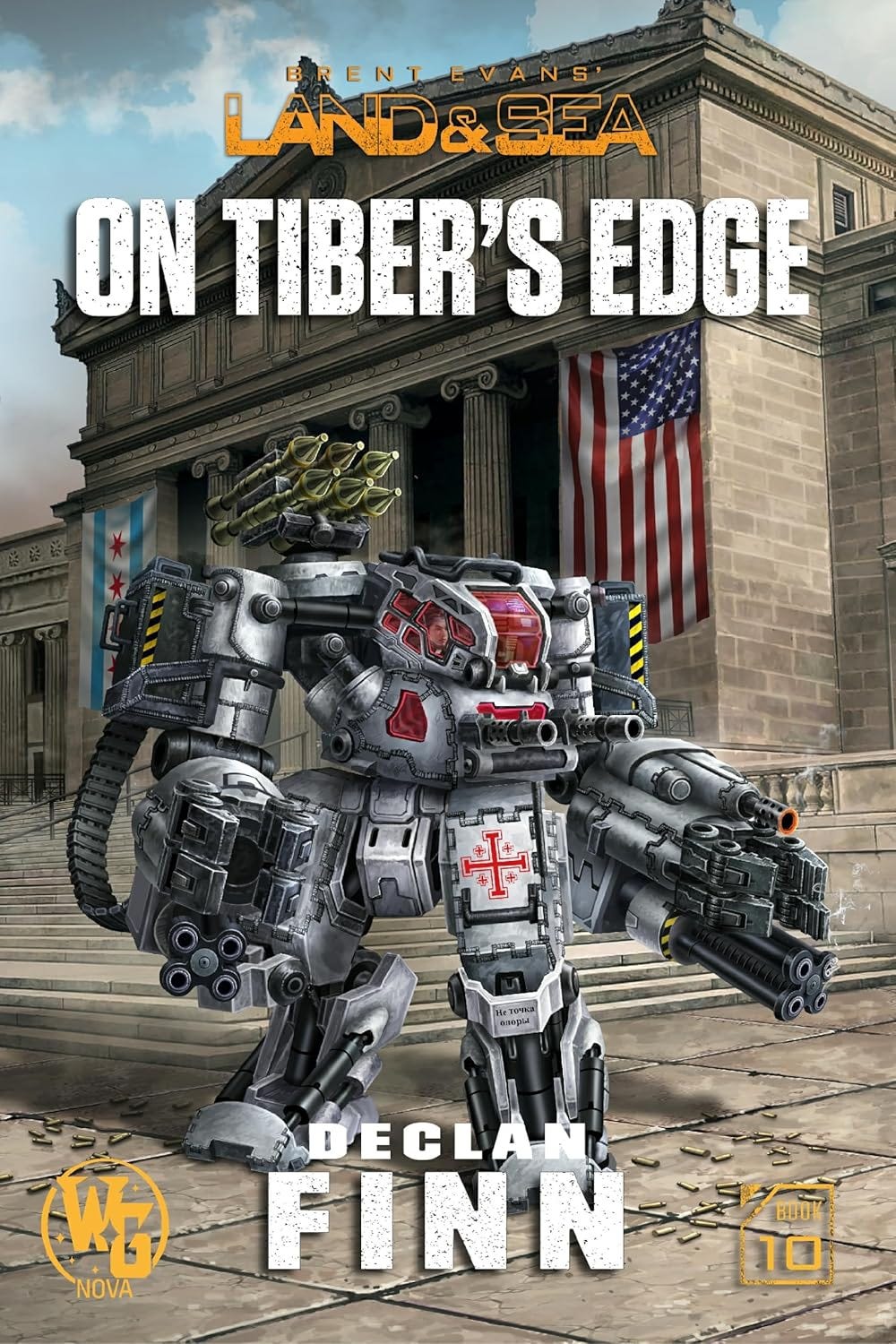
First of all… I didn’t really have a military. Did I have infantry to work with? Yup. But the first thing I established was that Chicago had one year to come up with a fighting force from scratch, out of the civilian population. That gave me the freedom to make up some of the rules as I went along. Especially since, as noted earlier, the aliens called The Fish are smart. The same trick won’t work twice. From what I understand about military mentalities, there’s “very formal” and then there’s “very flexible” and rarely the twain shall meet in the same person. I get the option of being the latter.
Second…
Since arriving in Texas, I’ve been watching a lot of Gun Tube.
A LOT of GunTube.
What does that have to do with writing On Tiber’s Edge for Blaine Lee Pardoe’s Land & Sea series?
Funny you should mention that.
I’ve been watching guys named Kentucky Ballistics, Brandon Herrera, Fat Electrician, Honest Outlaw, Garand Thumb and PewView.
If you know these people, you may have an idea of where I’m going.
If you don’t, let me explain.
Brandon Herrera builds guns. So I know more about how certain guns operate than will ever be useful.
I now know how to make even .22LR useful. It’s called an AM-180. And it’s cool.
Also, did you know that there are fewer regulations on black powder cannon than on handguns? I can order one and have it delivered to my house. Funny that.
Fat Electrician films videos on war heroes, as well as some of the development of makeshift weapons.
When I’m MacGyvering a defense of an entire city, it helps to steal from proven methods.
While they might be “military,” none of it requires an understanding of procedure or rank or bureaucracy.
Kentucky Ballistics prefers high-caliber guns of even higher-recoil.
So, say, if you’re infantry and you want to take out something like a bipedal tank, it helps to have heavy toys.
Garand Thumb reviews tactical tech, such as optics that will do all of the math for you.
Yes, that’s a thing that exists TODAY.
Honest Outlaw, and PewView review modern guns. So it’s nice to have some more basic toys to hand.
There’s also PSR (Print Shoot Repeat). Guess what he makes videos about.
Funny thing is that I started watching these videos before Blaine said anything about writing for Land & Sea.
But, clearly I need artillery, right?
Yes.
Yes I do.
Heh heh heh.
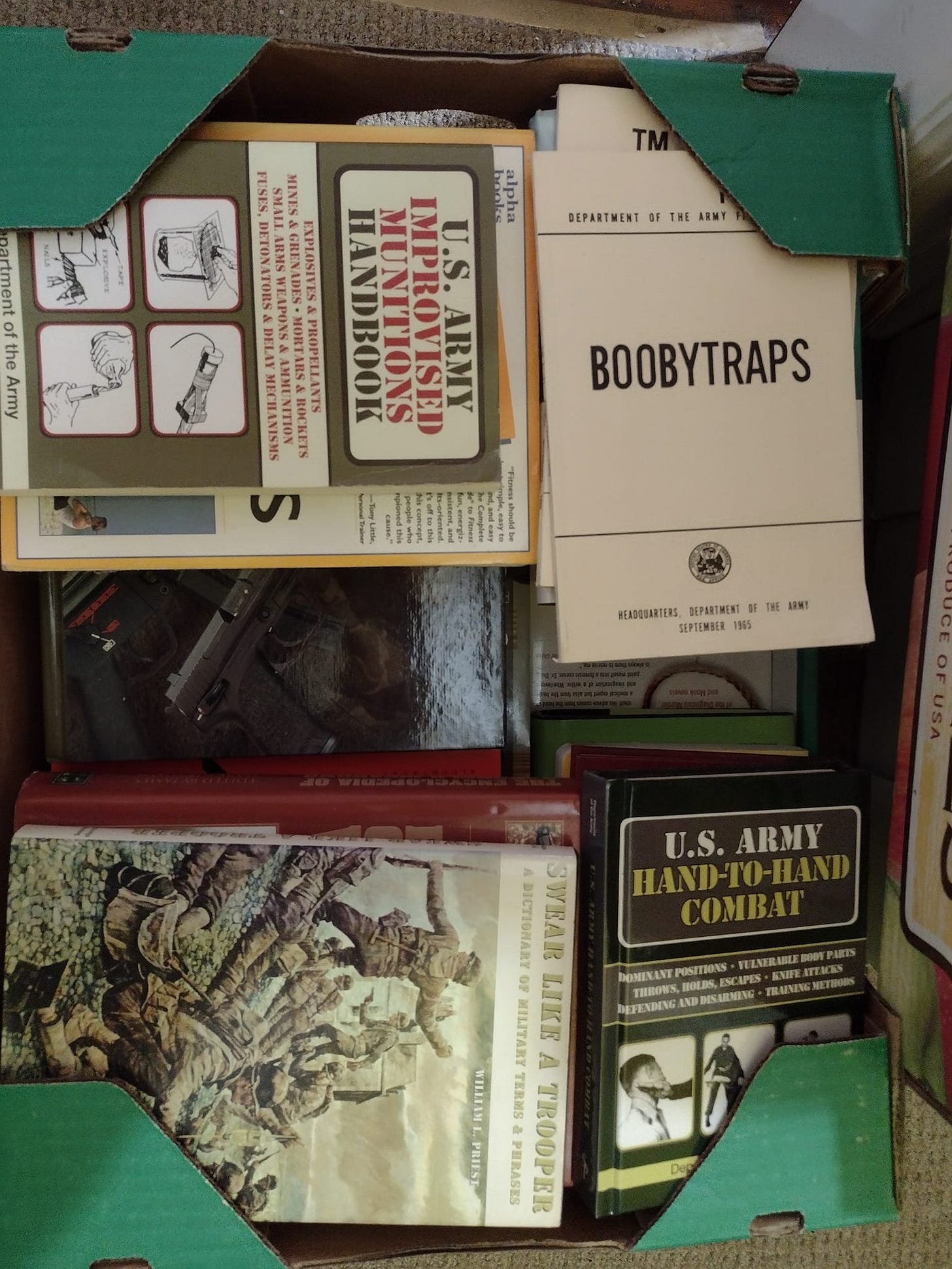 | |
| My research box. Box 1. |
I get creative.
For example, during the Cold War, did you know that when the Soviet Union gave the Egyptians a massive radar station, Israel just flew in a bunch of construction helicopters and air lifted the entire building?
How does that have anything to do with On Tiber’s Edge? You’ll have to read to see how I put that together.
I’m told that some of my ideas and concepts are good enough that they’re being inserted into the Land & Sea role-playing game manual. Which is cool.
Anyway, I’ve just dropped over an hour of YouTube videos on you all. So I’ll leave you to that.
1
I am 100% certain I stole that line from somewhere. I will be damned if I can remember where I stole it FROM.
Tuesday, June 30, 2026
Building On Tiber's Edge
In September of 2023, I had been recruited to join Blaine Lee Pardoe’s Land & Sea universe as an author. (See part one.)
I would be the first author who wasn’t Blaine Lee Pardoe.
Meaning that I was also the first author that they had to make a contract for.
So, while the back room folk (I assume it was more than just Brent Evans and Blaine) worked on creating a contract for me, I … cheated a little.
How do you cheat on writing a book?
I started writing it before I submitted the outline to Blaine for review.
What? I’d rather write the bloody book than talk about it. That will usually include outlining it. Besides, I almost always have the plot points in my head, I just needed to connect the dots.
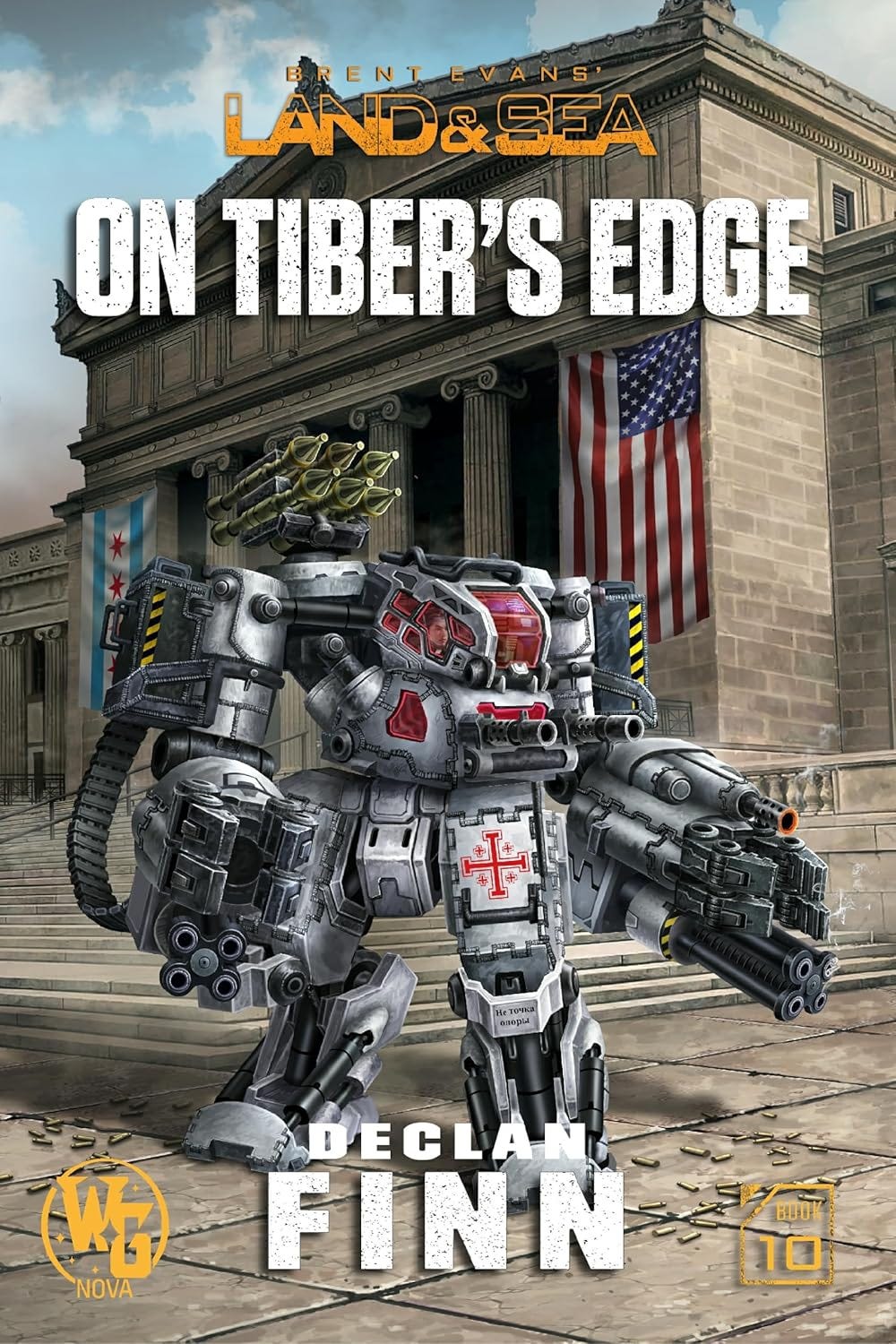
As I noted in the previous post: when I started, I tried to match Blaine’s original trilogy. So my vision of the novel was very Tom Clancy—taking disparate elements from different areas and tying them together.
After Blaine corrected my thought process, centering all of this in Chicago made my job a little easier…
If you don’t count that I had to actually defend Chicago.
Now, my idea was to build up to a grand finale. Blaine informed me that his aliens, known as just “The Fish,” would hit Chicago about a year after the initial strike in Splashdown. So I figured the opening of the book would parallel events in the initial trilogy, and build up to the battle.
Initially, it was maybe not be the best idea. On Tiber’s Edge would be book 10. The readers would be deep into the war by now. Starting from the beginning? Bad idea, right?
Ehhhh…
Blaine’s side novel Ratchet’s Run (Land & Sea #4) took place in the war-torn Los Angeles basin, which had been a set piece of books one to three. The other full novels followed main characters we’d met in book one. Everything Blaine had done had been built up to. I wasn’t thrilled with hopping into everything cold.
I wasn’t certain that I could just jump right in like that. In part because I didn’t know anything about the characters, so I didn’t know what I’d do with them after what I had planned.
Every city we’d seen attacked in the Land & Sea universe had been caught flat-footed. They didn’t see anything coming. But if Chicago has a year of prep time, all I could think was: that must change things. It had to make a difference. And the readers had to see it. They had to see the logistics. They have to read the events that would lead in to the grand finale.
Especially since I made a decision early on with how the battle would end, and I wasn’t certain what would come after that.
Funny enough, I have ideas for an “after”… but only after I finished writing that first book.
As for the battle for Chicago, it would be fought over twenty miles of the Chicago shoreline. In fact, I think the Chicago shoreline is closer to twenty-nine miles.
Blaine mentioned in an offhand comment on the phone that he wanted the L-train to be a shooting platform… well, the elevated train system goes north and south, paralleling the shoreline, as well as east and west.
Logistics, they are a thing.
Also, there had to be a battle over the entire shoreline, because if there was a specifically vulnerable point, that’s where the Fish break through, clearly.
Anyway, I had some ideas of how the battle would be fought.
Then I had to design the people who would fight like this.
In Land & Sea, Blaine likes local militias. He clearly prefers them over military officers.
There’s a point where I think Richard Sharpe likes officers more than Blaine does.
 |
| Richard Sharpe and Officers |
And when it comes to “the authorities” in Chicago … let’s just say that writing it during the Biden administration gave me some tips on how everything would go down.
In terms of militia, well, it’s Chicago. So we’ve got “the Outfit” (the Mafia) and black gangs.
If you’ve read The Neck Romancer, you’ll see that I’ve done a little bit of research on the black gangs of Chicago.
Also, if you’ve read The Neck Romancer, you may see one or two similar characters. Ahem.
So, there’s my militia of asymmetrical warfare troops.
Originally, I had a mafioso and a gangbanger as two main, point of view characters. Their roles were reduced in the outline edit.
At the end of the day, I made three main characters.
First, I needed someone who thought in terms of asymmetrical warfare. The Fish are smart. They never fall for the same trick twice. Ever. So at least one of my characters needed to come up with different tricks.
Also, it gave me the excuse to eschew standard strategy and tactics.
How about someone who has nothing better to do? When the war is broken out, who’s going to be out of job?
Foreign operators. Seriously, who is going to be trying to spy on Russia when aliens are destroying everything?
So I needed someone … who used to be a spy.
I had been reading The Icarus Twin at the time, so I had the name Weston stuck in my head.
My wife made jokes about Bruce Campbell’s character “Sam Axe.”
Well, I never really used the name Samuel that often. Ever, to my recollection.
Enter Samuel Weston, he used to be a spy.

So, those jokes wrote themselves. If you don’t know those jokes, I probably shouldn’t ruin it for you.
(Okay, I probably should have used Timothy Zahn’s joke in The Icarus Twin and named him Samuel Easton. But it’s only occurring to me as I write this. Nuts. Well, it’s a little late.)
For my next character, I needed someone military. Also, I needed an ASHUR (mech) pilot.
Duh. In this book of ASHUR combat, we need someone who can combat in an ASHUR. Clearly.
As the ASHUR pilots could be anyone, I went for a woman, because I think this was the only one in the entire novel. I wanted at least one, if only for a change of character dynamic.
Since the opening trilogy had everyone with a uniform get dragged in a rush to the east and west coasts, who was going to be left in Chicago? I needed her to be an officer of sufficient rank to lead, but low enough to be left behind.
I was originally going to make her a Lieutenant, but Blaine informed me she should be of a higher rank. I talked to a friend in the air force and checked for what would be a reasonable age for a Major (he was a Colonel). So I ended up with an under-thirty redhead.
I also wanted to make certain one of our main characters was a Chicago native. Last time I checked, I recalled that there were four major demographic groups in Chicago: Irish, Polish, Italian, black. I had the Italian and black covered with the “militia” faction above. Apparently, Samantha Carter of Stargate isn’t impossible.
So, much to my surprise, I ended up with a Polish redhead named Zofia.
Awesome.
Why Polish and not Irish? Because I think I’ve got more than enough Irish chauvinism in my novels as it is. (Also, there’s a twist I half-considered putting into the book that never materialized. I was so close to doing it.)
The third character had to be a priest. Why? Well, Blaine tapped me for this because he wanted a novel based around a Crusade against the alien hordes, I felt I kinda had to.
In my parish back in New York, there was a younger priest named Pham. I honestly can’t tell you if it was his first or last name. He was always just “Father Pham.” He became the physical model for my priest. I think I called my character James Pham … no, I’m not 100% certain about his first name. Yes, he is my own character and I forgot his name.
When my wife was first widowed, she and her then-husband had attended a lot of masses in Chicago. Particularly, St. Mary of the Angels church.

It’s an Opus Dei parish, so it’s not exactly within the usual structure of the church hierarchy.
Opus Dei is a primarily lay organization. A small number (<2%) of the organization are actually priests, no matter what certain fiction writing morons will say.
But dang, is it a nice-looking church.

And it pops up in Harry Dresden’s Battle Ground, by name only.
(Oh. Yeah. I shoehorned in a Dresden statue as well. Heh heh heh.)
Also, my Pham is a different type of priest. He has a prosthetic arm, fitting for a veteran of 2040.
Let’s just say I had a few seminarians in my college philosophy classes with some interesting and varied backgrounds. One of them introduced me to the saying “Semper Fi, do or die, KILL KILL KILL!” He was going to become a Trappist monk after being a marine.
Another element Blaine wanted was to sell off everything the Catholic church owned to support the crusade against the Fish.
Do you know why that’s a problem?
They’re like gifts to the President of the United States. Those are gifts to the office, not the person in the office. Yes, it’s antique furniture, but that’s because the Vatican has owned it for three hundred years, not because it’s particularly luxurious… and because no one technically has the authority to sell it off and buy folding chairs.
Also technically, the church is bankrupt half the time. When Pope Benedict retired, the Church was a billion in the black. When Francis died, the Vatican is back in the red. Repeat as an endless loop for decades. If they started selling off everything, the banks would want their cut. (Also, Italy would panic, since the Vatican museums are a healthy chunk of their tourist industry.)
So in order to execute what Blaine wanted, I started using the “cycles”—they’re asides within the story that Blaine uses to focus on other locations that aren’t main characters. I kinda turned it into its own subplot … with its own grand finale.
No, I did not create an African Pope named Pope Pius XIII, like I did for my Saint Tommy and Pius novels…
Cough…
I created an African Pope named Julius III. Totally different guy. Obviously.
Cough…
Also, Auxiliary Bishop Xavier “XO” O’Brian made an appearance as the papal Intelligence tsar. Yes, one day, I’m going to just give that man his own book.
Oh, yeah, did I mention I get to blow up Rome? AGAIN? Isn’t that AWESOME?
Freaking Italian bureaucrats get what they deserve. Yippy kay yay.
So, those are the characters and some of the arcs, and some of the design decisions. that went into On Tiber’s Edge…
Oh, wait.
Now I have to do actual military tactics and operations. Crap.
Monday, June 29, 2026
Getting into Land & Sea
If you go to the right conventions, you’d be surprised what happens.
In 2023, the year I moved to Texas, I went to BasedCon in Michigan. For lunch on the first day, Blaine Lee Pardoe sat down with me and my wife.
Now, Blaine and I had talked a few times before then. He read Hell Spawn, and on subsequent occasions, asked me a question or two about Catholic prayers and such regarding specific circumstances. I was helpful enough that one of the questions ended up in his second trilogy of Land & Sea. (I think book seven or eight.)
It was at that meal at BasedCon that Blaine told me that he wanted me to write a Land & Sea novel.
A word of advice I picked up from Peter David (RIP):
When somebody asks if you want to write in their series, you say YES.
But what if you don’t know the property?
You LEARN. Simple as that.
I think I did okay.
Who is Blaine Lee Pardoe?
If you know, you can skip this section. But I’m going to see if I can keep this short.
Blaine has written a whole bunch of novels. “Second American Civil War” novels. He has a Punisher Kills the Woke collection of novels. He’s written true crime.
However, the most relevant books for this discussion? Blaine used to write for Battletech, a mech-driven world that has RPGs (games, not grenades), video games, and enough media-tie in books to choke a horse.
Blaine wrote … 18? 20? Battletech novels.
For stupid reasons, he was fired from Battletech. Twice.
The first time, the woman in charge wanted to get rid of “all the old guys.” New guys would certainly be cheaper, right?
When they discovered how bad an idea THAT was, Blaine was rehired … and ended up being canceled by a stalker, who was deeply, deeply deranged.
After this second time, Blaine bounced back in about five minutes with a new series of his own IP: Land & Sea
What is Land & Sea?
For those of you who don’t want to read my reviews over at Upstream, I’ll sum up the series as fast as I can.
Splashdown: Aliens have been hiding under the sea for years, building up forces on Earth through various and sundry methods. And now they strike all the coasts of all the countries on Earth, all at once.
Riptides: Book one was just the preliminary attack. Now the war begins in earnest.
Storm Surge: The humans strike back.
Oh, yeah, and there’s going to be an entire RPG based around it.
That’s the really short and inaccurate version.
And Blaine invited me to play in this world, writing book #10.
Why me?
Why me? you ask. Great question. I’ve done some MilSF, but with all the usual cheats.
In one Land & Sea novel (Ratchet’s Run, if I recall correctly), Blaine had a throwaway line about how the Pope had declared a crusade against the alien invaders.
Blaine thought I knew enough about my own Church to flesh out what that would look like.
Did I have reservations? Oh, you betcha.
You see, I hadn’t read any of the Land & Sea books at that point.
There were on the list...
But so are half of the books in existence.
I have some books to catch up on.
When Blaine said “crusade,” my first thought was “The Pope Declares a Crusade, Islam will stop fighting aliens and declare war on Rome.”
Etc.
Then I read the books … no. No human is declaring all out war on any other human. Humanity is too freaking busy. They might be trying to prep for the next human war after the aliens are beaten back, but a shooting war now is a bad idea.
My second reservation: I don’t… technically … write military science fiction.
You see, with White Ops, I use the cheat used by many a science fiction author. As Kai Wai Cheah notes, there are a lot of people who use the same cheats: I don’t write infantry or naval engagement. I make up a “SpecOps” group and work my way around real tactics. (Funny enough, my ignorance has led to … reinventing the wheel. I seem to accidentally land in actual tactics from time to time.)
However, Land & Sea is straight-up military engagement. I’d have to fake it.
After reading the first three books, I made my first mistake:
I started building a book in the fashion of those three books.
If you haven’t read Land & Sea (and you really should) Blaine manages eight character points of view, spread out over three novels. They all tell one story, to a degree where it feels like Tom Clancy is writing Baen’s War and Peace.
I started building multiple characters, spread out over multiple places, trying to tie them all together. And since the war happened on coastal cities, I needed (1) a coastal city (2) I knew well with (3) a significant Catholic presence.
So, what I tried to do was build stories in the three places I knew best: New York, Texas and Chicago. I lived in New York City all my life. I was now living in Texas. And Chicago, I had been there a few times; my wife had lived there and in Detroit. So we were covered. (Boston is an option, sure … except I barely remember what Boston looks like, despite being there multiple times.)
In any event … Nope. Wrong call.
Apparently, I needed to read the next book: Ratchet’s Run, where Blaine does his version of Kelly’s Heroes.
Ratchet’s Run tells one story, with one group of people, with no one from the main series. That’s what I needed to focus on.
Also, Blaine had plans for New York City… in books I hadn’t read yet. (It may not have come out by the time, if I recall correctly.)
And Blaine had already written Texas in a short story…
That left me Chicago and Detroit…
And Blaine told me what happened to Detroit …
That left me Chicago.
Crap.
Now I needed to make people care about Chicago.
Well, that was going to be a task and a half.
Sunday, June 28, 2026
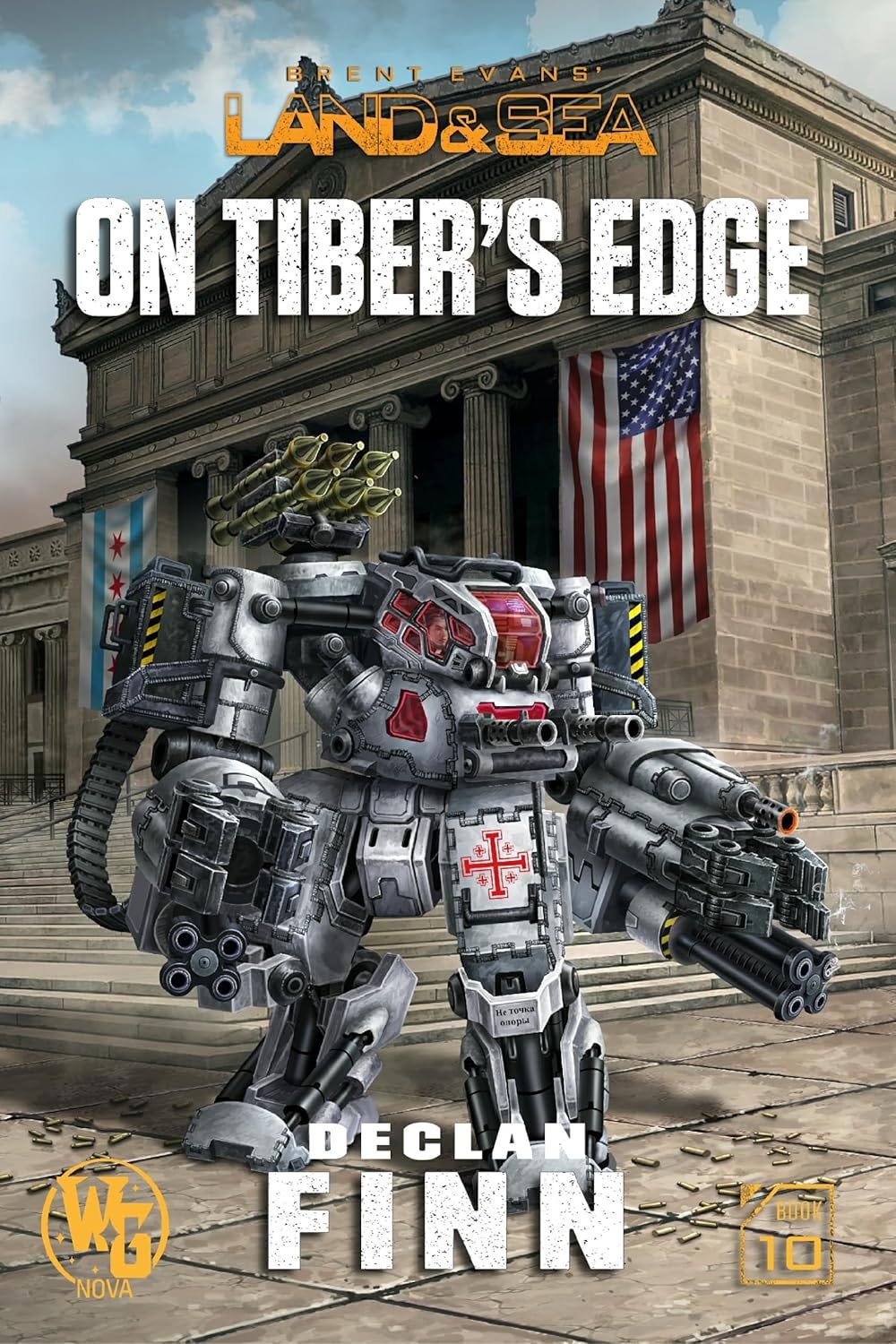
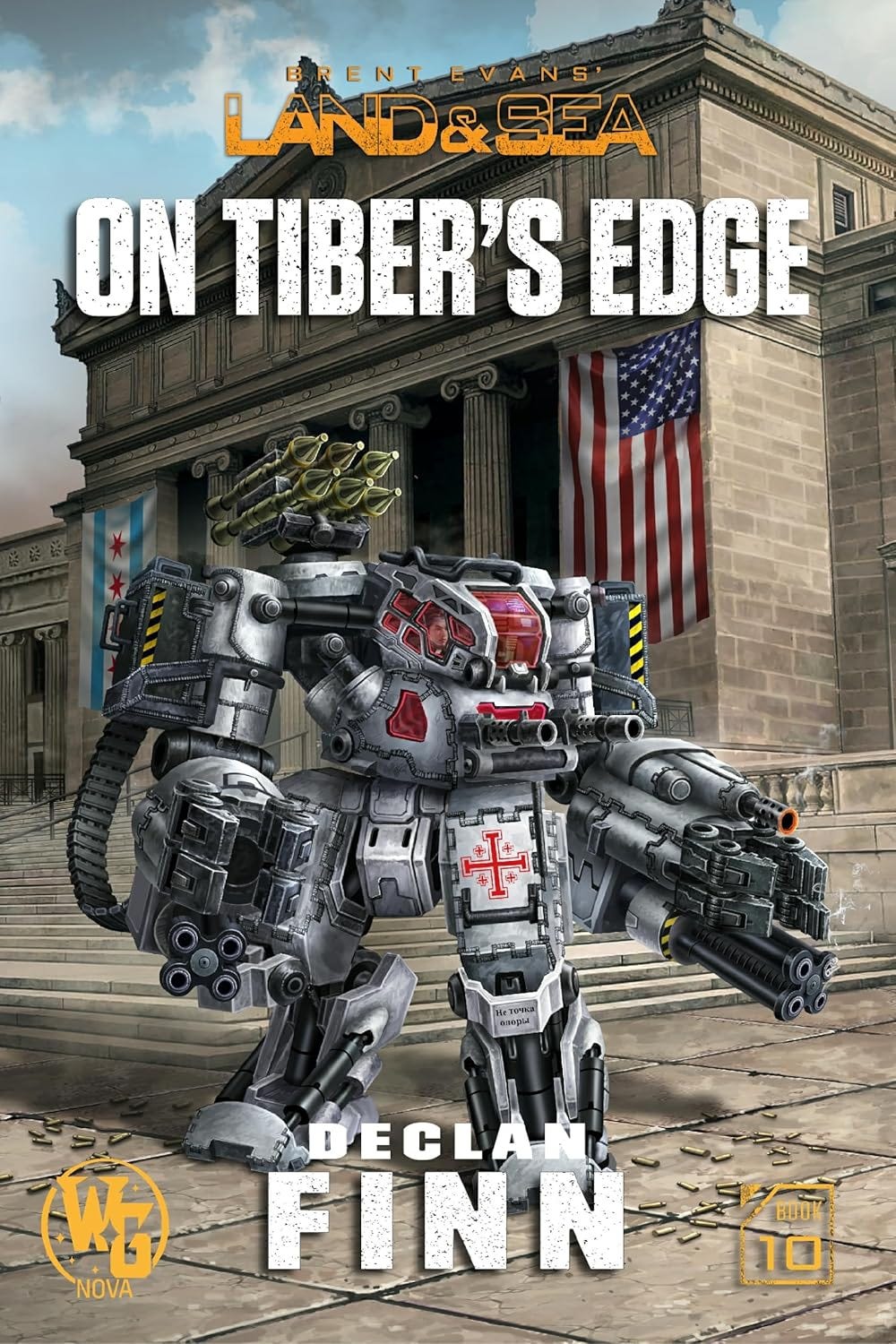
NEW RELEASE: ON TIBER'S EDGE (LAND & SEA #10)
New book
Welcome to Chicago!
When African Pope Julius III inherited the Throne of Peter, he expected to go to ecclesiastical war with China or Jihadis. Literal war with aliens was not on his bingo card. With humanity at stake, calling for a crusade is only rational.
When the city of Chicago is abandoned to support the East Coast, three people pick up the Crusade. Samuel Weston used to be a spy. Zofia Zelazowska is the only officer of the Guard left behind. And Opus Dei priest James Pham is has his own bureaucrats to battle.
With hostile gangs, Mafia and corrupt politicians in their way, this trinity must build an army of God before the army of darkness emerges from the depths and destroy them all.

I had some fun.
Blaine Lee Pardoe is a brilliant author, who has assembled a genius series. And I’m happy to be a part of it.
Do you HAVE TO read books 1-9 to understand what’s going on? Nope. I wrote it so you can jump in right here.
Would it help to read books 1-3? Yes it would.
Either way, have fun.
This is going to be a good day.
Saturday, June 27, 2026
Rage Marketing
Something that came up the other day in my interview with Mister D’Souza is Rage marketing.
We know what it is. Someone says something offensive, stupid, or unfunny in order to get clicks. Or they provoke online fights so they can get more eyeballs on their social media profile. BS like that.
You may have noticed, I don’t play those games. Why?

Eh. You know you what? Forget that.
I don’t like me when I’m angry. I literally get sick to my stomach. I’m told that it’s adrenaline dumping into the system due to having redhead genes. Something about overproduction of adrenaline in case of crisis? I don’t know, it’s a half-remembered piece of biological trivia.
But there’s been a lot of prayer and a lot of time invested in controlling my temper.
On bad days, I will crush you.
On good days, I will just unload on you; say something stupid, and I will educate you on why you’re wrong in intricate detail.
But these days, I can’t even be bothered with that.
Why? Because social media isn’t a real place. There are few if any real people, and I think I follow them.
This is my most recent angry moment. This tool’s “nativists” burned down Catholic churches, and advocated pogroms on Irish and Italians.
And I think I was pretty restrained.
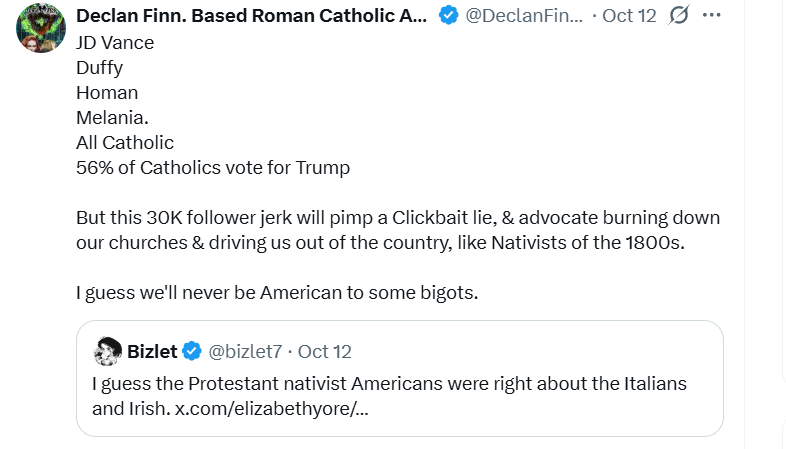
But do I think this guy will go out and burn down a church and shoot up the fife and drum corps of a police department? No. Because this guy doesn’t exist. He’s not real. It’s X. Nothing is real. It’s not a real place. There are no real people. And if he did exist, he wouldn’t have the balls to do anything about it.
I’m sure that one of his 60,000 followers might get ideas, because crazy people are everywhere. But this pissant is just another coward who will quietly delete their posts afterwards, or pretend they never said it, hoping that no one will remember the post existed.
Sure, there are guys like Larry Correia who will participate in internet fights as spectator sport. But no one learns anything from them. They’re not debates. No one walks away any smarter. And those fights won’t get me to read his high fantasy series.1
And there are people who will start fights just to get attention— because they are small people who only get a sense of self worth out of getting eyeballs on their posts. These people start fights, then pretend to play the victim afterwards. They’re crybullies who pretend to be marketing books.
I’m of the opinion that my books should earn your attention by being fun. By being entertaining. I don’t believe in rage marketing.
Hell, if rage marketing WORKED, you’d think someone who touts himself as the “Rage-o-holic” would sell the most copies online.2 Instead, I think it’s Jon Van Stry.
So, short version: I don’t like being angry. I don’t think it’s healthy for me. And, while we’re at it, I don’t really think it works that well.
If I ever got “FU money,” no one will ever see me online ever again. I will delete my social media. And then, maybe, I’ll buy a small film studio, and make books into films… or I’ll just buy all the really cool guns and a mountaintop fortress to live in, and never come out again. Either way.
Anyway. I don’t like me when I’m angry. And if you make me angry, my solution is simple: I block you. It’s for my sanity, and your protection.
1
Yes, I hate his Son of the Black Sword novels. I read book one, and found it boring and forgettable.
2
Instead, his artist threw a public temper tantrum about how it didn’t sell enough books to make it worth his time. A tantrum that I heard about second and third hand, from multiple sources. And no, I don’t follow either the author or the artist.
Thursday, June 25, 2026
Hollywood Fatigue
I wanted to do a follow-up to this post.
You may remember that the premise of BS Fatigue was that I didn’t think that the failure of superhero films was “superhero fatigue.” My thesis was that the failure lay more in the lack of quality control, and saturation of political nonsense stuffed into plots and casting and marketing.
Since then, how was 2025?
Oh dear, however did that happen?
Remember my quality control issues I pointed out in “BS Fatigue”?
Yeah.
It’s not Superhero Fatigue.
It’s Hollywood Fatigue
In the immortal words of the internet, “F you, I was right.”
And yeah, you could rattle off a whole bunch of factors.
Streaming, for example. Drinker mentions it in his video. Hollywood hasn’t adapted to the streaming market. They don’t know how to make money off of it like they did with DVDs. It used to be that if I wanted a set of Death in Paradise, it’s a British murder series, so I had to wait years before the price dropped to something sane ($20 as opposed to $50). Now, with streaming, DVDs aren’t priced the same way. And Hollywood just hasn’t figured it out yet.
In a world where I can buy a DVD of a new film for $17 a month after release, or take my wife to the theaters for $24 as soon as it comes out, I’m taking the $17 with home delivery.1
“Financial flops”: And yeah, Hollywood is spending like drunken sailors. Hell, drunken sailors can only spend money they have on them. Hollywood is taking out bank loans in order to finance films.2 Tell me, who thought it was a good idea to automatically assume that “my movie is going to make a billion dollars3”? If you believe Grok, before The Avengers (2012) only ten movies broke a billion dollars.
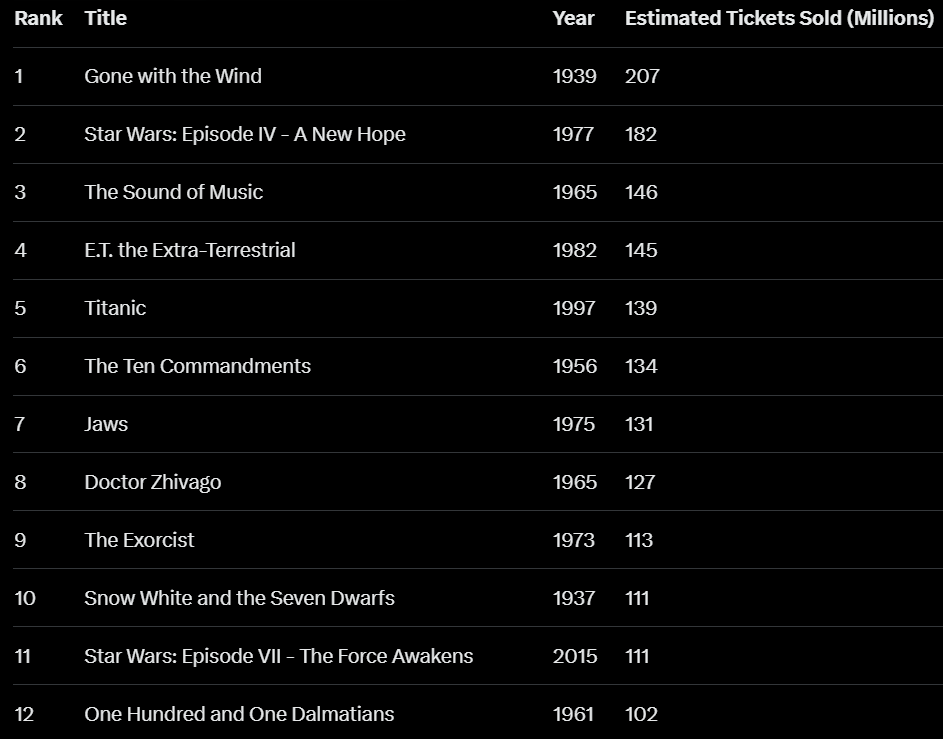
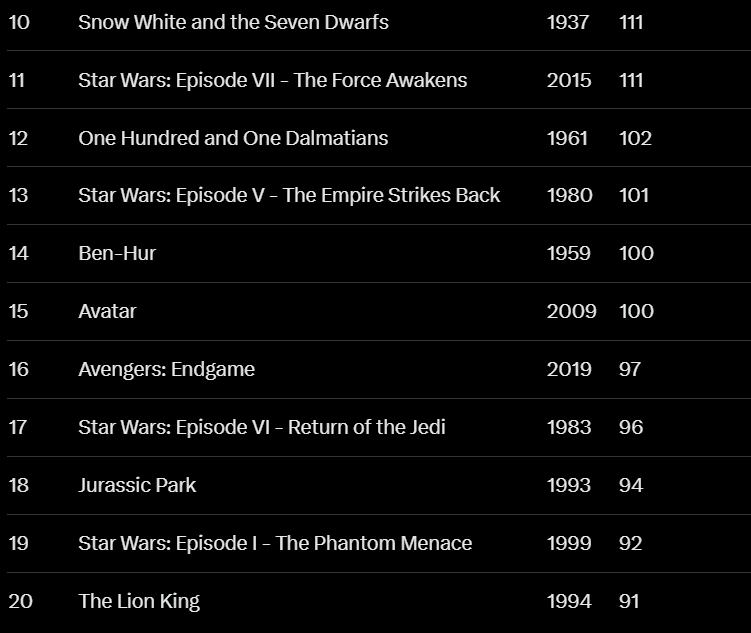
And only 11 Marvel films4 broke a billion at the box office.5 As of now, we have nearly 40 MCU films. A cultural juggernaut broke the billion dollar threshold with one out of four films.
Since The Avengers, it’s been 13 years. How many films have made Avengers money? 44. Some of them are other MCU films. Since 2012, over EIGHT THOUSAND FILMS have been made.6
Why make a film and then assume “my film will make a billion, so I can invest the half a billion”? Were I into business, those are not odds I would want to play.
I’ll grant that those are issues. Hollywood needs to learn how to integrate streaming into their business model. And they need to hold the purse strings way tighter.
But they need better writers. Don’t believe me, look at IMDB for the CV of some MCU writers after Endgame.7 Or the writer of Snow White.8 Consider shilling out money on the front end, with competent writers, and maybe Hollywood can save money on the back end with CGI and insane directors who get “creative.”9
They need to stop throwing CGI at everything. Don’t believe me, compare Iron Man CGI to Ironheart CGI. Demand has gone up by an absurd amount, deadlines are tighter, quality has suffered. Could I have been tempted by The Marvels? I’m not sure, but having enough CGI cats in the ads that it looked like an animated film didn’t help.
They need to throw a net over their damn actors. I know I don’t like to give money to people who hate me. Jennifer Lawrence figured out that she should keep her mouth shut, only after her career cratered enough that she needed to do a full front sequence in a comedy, and her IMDB profile has year-long gaps. It may be too late for Rachel Zegler. Alan Richardson is in damage control after screwing over League of Ungentlemanly Warfare (and maybe Reacher), by doing commercials and comedies.
Hollywood can also stop with tHe MeSs@g3. Does every action hero have to be Keanu Reeves? No. But I’m not going to believe that the fat gay black woman is going to drop the seven foot body builder.10 I will not accept waif fu unless we’re in comic books or supernatural fiction. Gay folk are maybe 3% of the population, I don’t need them to be 50% of the characters in media. Stop turning every fantasy world into downtown Manhattan.11 I can go on.
You know what I saw in the theater this year? A Working Man. Why? Because I like Chuck Dixon and I wanted his film to do well.
But Hell, you know how bad it is? I got the DVD for John Wick 4 a few weeks after it came out. I did not see it in theater, because 2023 was a busy year for me.12
I didn’t watch it until October of 2025. Why? Because I was just waiting for them to drop the ball. Because it’s Hollywood, of course they’re going to drop the ball. Did they? Well … I don’t know if I would go that far, but I can add another reason why Ballerina didn’t succeed.
And I think Ballerina is a good example of yet another Hollywood problem. Hollywood doesn’t want to put in the work. Ballerina shouldn’t have been treated as “another guaranteed John Wick moneymaker.” It wasn’t. It was a test run. But Hollywood poured in $90 million dollars to make the film, and didn’t even take in $140 million. They should have treated it as ground zero, and put in only $30 million. (Also, Len Wiseman as director? Really?) The MCU couldn’t put in the effort to establish other superhero, and expected inertia to keep bringing in billions of dollars.
At the end of the day, Hollywood has multiple problems. But I think base competence is the biggest problem. It can’t be bothered to create a good product. They’re putting in zero effort, trying to chase easy money. Hollywood can’t even bite back its hatred for its own audience. So why should I burn time and money to support them? Why should anyone?
Anyway, that’s all for now. Illegitimi non carborundum, y’all.
Subscribe to:
Posts (Atom)