Showing posts with label book reviews. Show all posts

Monday, January 25, 2021

Between Home and Ruin (Fall of the Censor Book 2), by Karl K. Gallagher

https://amzn.to/33VogMk 

https://amzn.to/2Lu0RuE 
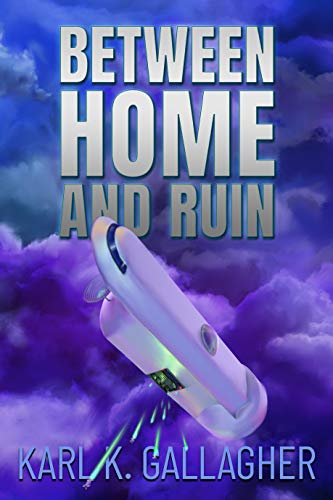
During Karl Gallagher’s Torchship trilogy, I noted that he is as good as David Weber in the realm of space combat. It helps that he’s a rocket scientist.

With Karl’s previous book, Storm Between the Stars, he decided to show off his world building, with a little bite of weaponized physics at the end.

With the sequel, Between Home and Ruin, Karl just wanted to show off. Make a book that’s 25% world building / culture shock with some diplomacy and politicking? Sure. Make the next 40% about logistics and a murder mystery thrown in? No problem. The last 35% nothing but non-stop space battle? Why not?

And Karl makes it look so easy.

In Storm Between the Stars, we followed a trade ship crewed by the Landry family. Much of that book focused on the father, Captain Niko Landry, as the crew explored the strange new space of the Censor—a space empire that has all the worst traits of George Orwell and Fahrenheit 451. I’d throw in the French Revolution, but those guys are amateurs compared to the Censor.

Between Home and Ruin focuses on the son, Marcus Landry, during the return trip. After the events of Storm Between the Stars, the crew reported to their government about contact with the Censor. The Landry’s home system has decided that the opening step is to open negotiations, and has taken (most of) the original crew (and their ship) to haul an entire embassy full of diplomats to the Censor. And after a while, his wife, the local Wynny, takes up a lot of heavy lifting in the book.

What follows is impressive, in part because everything advances the plot, and contributes to world building at the same time. Even the recap of events from the last book service the plot, since most of it is to make the new characters understand exactly what the events on the ground really look like. And forget Chekov’s gun, we have Chekov’s weapons depot. I haven’t seen a story this well structured since Die Hard. Trying to introduce Christianity to a world where oral tradition names God Harold (old joke: Harold be thy name), or a three page description of a local movie turns two seemingly unrelated “throwaway scenes” into a plot arc.

When we get to the combat, I must admit that I haven’t seen space battles this good since Timothy Zahn wrote Grand Admiral Thrawn. And Karl spends his time on only two ships during combat. Everything is either from the point of view of one freighter converted into a gun boat, or a capital ship. And if you told me you could make a large space battle tense, just by restricting it to reports on a bridge, or capturing a space dog fight with fighters just by reporting what’s on the screen, I wouldn’t have believed it.

I also haven’t seen this much visible intersection of culture impacting warfare since Victor Davis Hanson wrote Carnage and Culture. The Censor kills culture by making certain that any created work is destroyed with the author’s death—which becomes a problem when it comes to writing military textbooks. Heh heh heh. Also, they get to learn the hard way what happens when their military hierarchy is run with political officers on hand.

All in all, Karl has captured a book filled with readable and entertaining diplomatic negotiations, politics of warfare, cultural clashes en masse, interstellar warfare, a romance thread that I didn’t mind, and a murder mystery thrown in for fun.

Monday, September 21, 2020

Review: Overlooked Again, by Jon Mollison

 The old poem goes

There was a man upon the stair

A little man who wasn't there

He wasn't there again today

Oh how I wish that he would go away.

He's back and he's armed in Overlooked Again

Yes, this is the return of superhero Joe Smith, Jon Mollison's contribution to Silver Empire's Heroes Unleashed series. And dang is it fun. His Phoenix Ring series may be the best part of the universe in a neck and neck race with Kai Wai Cheah's Hollow City thread... though that may be unfair, since Mollison and Cheah are the ones who I have read two books of (No, Cheah's next book isn't released yet. But I had early access. Heh heh heh). And at this time, there are two other authors who I haven't read yet.

In Overlook, Joe Smith, a prime with the power to be ignored, encountered the Phoenix Ring, a grand conspiracy that looks like if Dean Koontz designed the Illuminati,** and bringing in an element of The Man who was Thursday. But Joe also found a counter conspiracy. After crushing the ring in Serenity City, now, Joe has been quietly keeping the ring in its place -- in the graveyard. 

But like any good villain, the Phoenix Ring has its own counter move. Because they found not only one, but two people who can pierce Joe's powers, and hunt him down. So it's a good idea for Joe to leave town for a little bit.

Joe's new mission: go to Halo City (last seen in Cheah's Hollow City) and make certain that the Phoenix Ring can't rig an election for alderman.

But the Phoenix Ring hasn't gotten to where they are by lying down. They have all the forces of governments behind them. And Joe Smith is their primary target.

Overlooked Again is fun as much for what it does as what happens in the plot. The book is well written, obviously. As I said, I think there are a few references to The Man who was Thursday, some bad puns (The Phoenix Ring runs Firebird Industries? Ugh. How did I forget that from the first book?). 

And the villains. How could anyone forgot how absolutely evil these bastards are? They lack the mustache twirling of the most recent Dean Koontz novels, but they are no less pure evil. Imagine if the Chicago Machine was the tool of Satan... No jokes, please. I'm saving that for another novel I'm writing.

But what happens when a former sniper becomes the man who wasn't there? He becomes a ninja. No, I'm not really joking. You'll see him in action in the first chapter. Which starts out as very by the book, and ends in a tense, and interesting chase.

In the middle of all of that, Jon Mollison pulls off an excellent data dump that both recaps the last book, tells the reader what's been happening since then, and does it all without reducing a bit of tension. It's information discussion on par with David Weber (Or, see: David Weber orders a pizza)

Along the way, Jon has two interesting people after our hero. The first is a French hunter, the Owl, a prime who can hunt Joe, and fight him to a standstill. The other is ... well, you'll have to read it to get it, but it's a lead in to what Jon does with this book.

While I am not able to track what phases the Heroes Unleashed universe is in with this book (probably phase two), we have now entered the phase where there is overlap between the main heroes we're working with. It really begins to show off the shared universe all these players live in. No, I don't mean simply that Joe goes to the city created and written by Kai Wai Cheah, but this is also a world where the Atlantean (and Lovecraftian) magic of Richard Watts is an active threat.

And of course, they're all out to get Joe. They lead to moments where my only note was just "Aw f***"

The writing is also enjoyable. Little comments and phrases, like how "he could have completed the ensemble, but he would have stuck out like a disco ball in Church." Though I hear some megachurches already have those...

I also liked the very casual "You can't just murder your way out of this problem."

And everyone here is well written. The villains are colorful and three dimensional. The supporting cast beautifully compliments our hero. And the upper villains are pure bastards.

Anyway, it's all very well executed, and I look forward to reading the next one.

5/5. Buy it here from the Publisher (Amazon link forthcoming)

**Yes, I have read the Jane Hawk series, where he had something like the Illuminati. But this goes back much farther.

Wednesday, August 26, 2020

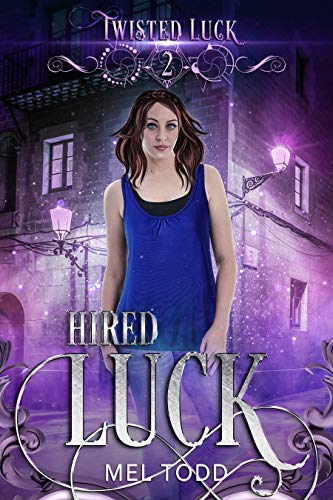
Review: Hired Luck, by Mel Todd

I've reviewed the main story arc of the Kaylid Chronicles.  And I reviewed book one of this series, My Luck.

My Luck was about Cori Catastrophe as she received her triple Associates degree.

Hired Luck.

New city, new job, new threat?

With my best friend going to college to learn how to use her magic, I'm job hunting in Atlanta. We're sharing an apartment and I've never been happier. The last thing I needed was to be involved in a murder investigation. Now the police are sure I had something to do with it. News alert: I don't. I've got a job, Jo's going school. I finally am on the track to have my own life.

Working as an EMT is great, but something weird happened at work. Something I can't explain. What if I'm wrong and I am a mage? The last thing I want is to be a mage, it would mean I'd lose everything I've been working for. Even if I am a mage, I'd be a low ranking one, a hedgemage, something that means I can keep my current life.

But I can't get the dead girl out of my mind. Who was she and why did she die? What good are my skills if all I do is keep finding dead people? With a serial killer out there, the police and FBI stepping in, I might lose more than the life I had planned. I might lose my life. Once again my luck holds true and I'm in the middle of something I don't know how to deal with.

This one opens with a nice omage to the opening of book one, and this time, it's the inciting incident of the plot ... however, Mel takes her time before springing that on you. From there, we get a less-than-stellar view of Atlanta. If this is what it's like to live there, cross Georgia of my list of states to move to. And, this being SFF in Atlanta, we have DragonWorldCon ... I wonder how many puppy kickers will object.

Mel has finally gotten around to the serial killer plot she hinted about back at least one series ago. And of course, Cori is going to be sucked into it.

The damn thing of it is that I can't tell you most of the plot because at the one third mark, we can throw out this entire above description of the plot right out the window, and the plot takes a breakneck one-eighty. 

Many of the revelations will be nothing surprising to the careful reader of book one.

However, once we explain all of those conclusions to Cori, that's where things go off the rails for her, and the real plot begins.

This one will be a 4/5. I had hoped this would be my Dragon Award nomination for fantasy for next year. But something about this held it back for me. I can't put my finger on why. Perhaps Mel tried to do too much with this novel? Perhaps she should have pushed this plot to book three after doing a book on the job Cori has been trained for? Again, I'm not entirely certain. Book 1 was carried entirely on character and world building. This has more of an emphasis on plot-- but like every murder mystery, it helps build the world on the order of How Things Work.

Not to mention that we spent a good chunk of the middle novel introducing us to new characters ... after spending the first third of the novel introducing us to new characters. We don't get many calls for Cori as an EMT, which made me a little sad. And I think that might be what held this one back--the tonal whiplash at the 30% mark. As I read through my notes, there are tonal shifts all over the place.

There are, as usual, a bunch of nice little touches. The magical crime family Rasputin, for example. Or the Merlin Arthur Conan-Doyle. Or that the FBI never changes... nor does public school. Or academic politics.

And unlike a certain magical universe, Cori contributes to the plot BECAUSE she has no assumptions, and all of her basic knowledge is fresh in her mind. There's a nice bit about biases, against her and for her, and how certain changes in her life change her--in ways she doesn't like. Then we take basic knowledge of the world, and throw it right out the window, heh heh heh.

Also, frigging magical tree cats. Also, unicorns can be scary.

A major plot issue to be addressed (not a problem to be fixed) is the conclusion. It's very much like Black Sunday meets an Indiana Jones movie, but not quite as satisfying. Yes, that is particularly vague. But I suspect you'll figure it out when you finish it. But it left me feeling vaguely dissatisfied. It was also heavy into sequel baiting, where the resolution to this was the creation of a whole new set of problems.

My biggest quibble? The casual, arbitrary and capricious dismissal of all religion... well, all Christians. And Jews. Apparently, no priest who has magic abilities wanted to be a healer? No Rabbinic scholars went into the field of doing a deep dive into magic? Somehow, all of the meditations, focusing exercises and mental disciplines of Christianity are instantly useless in this world of magic. Why? Because magic... That's it... Seriously? It's not even magic, it's matter to energy conversion, like the transporter or replicator on Star Trek

But Druid and Wicca are on the rise! Yeah. Sure. How many other human-sacrifice cults would you like to bring back? Because human-sacrifice is literally a massive plot point of this novel. So that strikes me as six kinds of Really Bad Idea. 

And it's infuriating because it's two throwaway lines in chapter openings that usually contribute to world building. And it was mentioned twice, without having a single ramification in this storyline.

But "Oh yeah, that guy in Rome is just a figurehead of an empty church." Right. It knocked me right out of the narrative and just plain irked me.

As I said, 4/5. 3/5 if I'm feeling pissy.

Anyway, buy a copy here.

Thursday, August 13, 2020

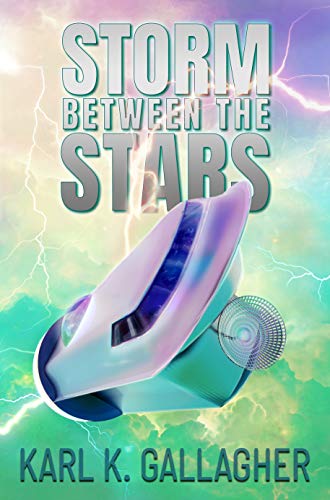
Review: Storm Between the Stars, by Karl Gallagher

Anyone who follows my reviews knows that I've been a fan of Karl Gallagher's books. He delivers character and plot, even at times when you don't know which he's delivering on. Torchship was a better Firefly than the actual product. His Lost War series is criminally underrated, even though I think it's even better than Torchship.

And now he's back to a slightly harder SciFi, with a bit of a twist to it.

Storm Between the Stars: Book 1 in the Fall of the Censor is his latest release. I was worried about spoiling the key threat in this book... but the series title has already given that away.

To begin with, Niko Landry is Captain of a family-owned and operated freighter. Like all shipping companies, he makes a lot of deals based off of what will sell better in X system over Y, and never leaving his cargo hold empty. 

When Niko and his crew find himself lost in space, he finds himself in the midst of a great business opportunity. After three thousand years of a human diaspora caused humans to flee Earth and being subsequently cut off from the home system, they find themselves to be the first ones to have found a way back.

Since the Landry family business is private, they don't have to report anything to any one. They're the first ones back to the home system, and therefore, the first ones to find what new resources and technology may have been developed in the last three thousand years.

But Earth and the associated systems are now ruled by something called "the Censor." And what seems to begin as a system of bureaucrats is slowly revealed to be a creepy, terrifying system of oppression. Each new revelation makes the reader feel new levels of dread every time. It goes from "aw Hell" to "aw f***" to "why aren't they running?"

Karl essentially unveils a system, piece by piece, that builds into 1984 / Farenheight 451 IN SPACE, and ends with an interstellar space chase that David Weber would have been happy to have written. It feels a little like the end of On Basilik Station, only our heroes are being chased, and they don't have real weapons. Their only weapons? Physics.

Karl does a good job of developing a world. Many of the ideas are sane Libertarian. I have to make that distinction because there are the libertarians I know, versus the ones I've seen in public. He has a smart and sane approach to extended families, marrying into a family business, barter to get around taxes, how to work around oppression, and a lot of cultural elements that would make some libertarians I know scream like a sunburnt vampire.

There is also a great bit of work on language. I haven't seen this much effort put in since John C Wright's Somewhither. It's not as extensive, but it works well for the story. 

And there are nice little touches here and there. Character names that are very ... Welsh. Details on spaceship cargo loading. Human zebras (long story). Bringing back the zealots.

The only problem with this entire novel? We could have spent five pages on the crew being a bit more impressed with "This is something no one on our side has seen for thousands of years." In the book, they were all business, no wonder. Five pages would've been enough. It's a minor quibble, but I have to find a flaw somewhere.

In short, it's great world building. And I definitely enjoyed it. At least a 4/5. Maybe 5/5. I definitely recommend it. There's sequel bait, but there's there isn't a cliffhanger. So this won't cause you to throw your book against a wall.

Buy it here.

Monday, June 29, 2020

Review: Mel Todd's "My Luck"

For a while now, I've been reviewing Mel Todd's SF series, the Kaylid Chronicles. Before I wrapped up that series, Mel asked if I would be interested in reading her next series, an Urban Fantasy (no romance) called "Twisted Luck" -- book one of which is My Luck. 

I enjoyed her space opera, so of course I was going to want a free book from an author who I already enjoyed.


My Luck's flap copy is as follows.

I'm not a mage, but that won't stop me.
Cori Catastrophe. They call me that sometimes, and I hate to admit it, but it isn’t wrong. Things go weird around me. Electronics die, things break, and if something odd happens, I seem to find it. Finding another dead body just made me late to work.
Nothing will stop me from getting my degree, getting a job, and getting away from this tiny town – though leaving my best friend will hurt more than anything else. Reality seems determined to make reaching my goals impossible. The dead guy had my name in his pocket, my best friend emerges as an archmage, and my parents – well let's just say leaving them behind is one of the best parts of getting away.
So be it. Not being a mage means I'll have to struggle to succeed. No matter how weird things get, I'll make it. I lost my brother and I'll probably lose my best friend to the world of magic. All I can do is depend on myself.
But with my luck, that might be difficult.

Let's start with something simple. This has the best opening routine since "The building was on fire and it wasn't my fault." I hope I don't have to explain that reference. But the opening is a dark comedy routine that I read to anyone who would listen to me.

Once more, Mel Todd excels at world building. As is her style, she opens each chapter with a bit of history and culture around the world. This time, magic has emerged in the world in the late 1800s-- a few years after the Civil War (which, of course, leads to in-world alternate histories of what the Civil War would have looked like if magic had existed a few years earlier). Mel doesn't use it excessively--we hear about the partnership of Rasputin and Lenin, but not a lot about World Wars (okay, FDR is still an a-hole)--and it works just enough to give a flavor of the world.

The real world building comes throughout the story. Our heroine, Cori, is getting her degrees in the most practical certifications she can--EMT, Medical Assistant, and Criminal Law--which also happen to be the best points of view from which to present slices of the world. Within the narration, some of the sections that are obviously data dumps are worthy of David Weber. Then again, one section did start with "most of the bodies I found were rarely stupid or boring." So anything after that will grab your attention.


Again, like in Mel's last series, her world building is either brilliant, or borders on brilliant. In her world, every mage of a certain strength must be trained, and every mage is full-on drafted. She prevents this from having shades of Babylon 5's Psi-Corps by having over half the population be magical--there isn't discrimination against non-mages, but the upper brackets are surprisingly heavy in the magic set.


I especially like the impact on culture. Facial tattoos for mages are part of fashion. The magic system recommends long hair (magic is powered by cellular matter-to-energy conversion of the mage's DNA-- eg: Okay, Winston Churchill was a Time Wizard who kept checking future timelines to win the war, which is why he was bald all the time). There are aspects of law (pay attention to the "Good Samaritan" laws). Diamonds are basis of currency, because freaking alchemists. And I even like that she hints at an origin of magic coming through rips in dimensional planes that make me want to call Doctor Strange.


Though the "Office of Magical Oversight" being established by Lenin? A little creepy.


The execution of Cori and the "bad luck" around her is ... entertaining. The luck that is inflicted upon her and people around her is very Rube Goldberg in nature.

I only have one question. Are the students of George MageTech still considered rambling wrecks?


And I am so, so happy that her description only covers the first third of the book, you have no idea. Though by that point, the reader should be clued in to one of the major aspects of the book that is only hinted at throughout--making the rest of the book interesting to watch, and the reader feels slightly superior to our narrator along the way. Part of what Mel does with this is a trick I've only seen used with Nero Wolfe novels of Rex Stout -- she gives us the answer to a major question of the book ... only the answer comes before the question. The answer is "Ronin."


Also, in Chapter 21, Mel Todd hints at a serial killer, and never capitalizes on it. She did that with a possible shifter serial killer in Kaylid, and does so here too (here, it was a reference to a killer who had happened, and was magical. I'm starting to wonder if these are discarded plot threads at this point.)


Once again, Mel does cops so well, I'm surprised she doesn't do any research for them. They feel very much like cops I've known. Also, some of the situations are analogous.


The comedy is right up my alley. Then again, I laughed out loud when someone asked, "We have a serial killer?" and the immediate reply was "Please. That's an Atlanta Thing. Probably."


Much to my surprise, this entire book is carried by character and world building. And when I say I was surprised, I mean I was 80% of the way through the novel (chapter 34) when I realized that this wasn't what you would call plot heavy. Normally, I'm very dismissive of media that is clearly more of a setup for a series than a standalone ... but this was so well executed, and so self contained, I can't really say anything against it.


And I mean I have nothing against it. Nothing at all. Even the Kaylid Chronicles had errors sprinkled throughout--many were minor, but some just drop-kicked me out of the story. Here? Not a thing. Trust me, I was looking.


But this felt more like the good old days, when Laurell K. Hamilton was good, and could tell a story without turning it into a hundred page orgy. Looking back, this is probably even better than early Anita Blake.


Anyway, five stars, out of five stars. Go buy it.

This one is a little bit too close to the wire for the Dragon Awards. Had it come out earlier so it could get a good head of steam, it would be right up there with best fantasy, neck and neck with Robert Kroese. However, book 2 will be eligible for next year -- it comes out in July. Anyway, while you wait for the book to download, I suggest making certain you've voted in the Dragon Awards this year.


Monday, June 22, 2020

Mel Todd's Incoming, Allies and Family

I already started reviewing Mel Todd's Kaylid Chronicles. I made a point out of reviewing them one by one. First with No Choice, and then with Commander.

I was going to do the same thing with Incoming, Allies and Family ... but I read them all in one big bite, so here's one review. Screw it, let's hit the fast forward button. We have a series to finish. 

Incoming (Kaylid Chronicles Book 3) by [Mel Todd]Truthfully, one of the reasons I read the last three books in one swell foop is that the story is continuous from Incoming onward. 


At the end of Commander, we had learned that our heroes -- Police officer McKenna Largo and company -- had been turned into shape shifters by nanotechnology, unleashed on the planet by an alien race known as the Elentrin. The plan is simple -- the Elentrin were to come, collect the "inconvenience" of the shape shifters off of our hands, take them away... mind wipe them, and reprogram them for canon fodder in their war of extermination against another alien race.

As I've said before, these guys would be right at home with John Ringo's Darhel from the Posleen wars.

With Incoming, the Elentrin are coming to Earth, and they want their canon fodder. And they want them now.

Again, this one feels a bit like a John Ringo novel. It focuses a lot on how things get done. And how does one prepare for an alien invasion with a two week's notice? Guns. Lots of guns.

Also with we change the format a little. With No Choice, and Commander, the real action takes place in the last third of the novel, kidnapping and forcing our heroes into a situation they don't want to be in. Here, yes, the action is in the last third of the book ... but this time, it's full out alien warfare.

And yes, Incoming has all of the smart choices and intelligence observations that I've come to expect from Mel Todd.

5/5, easy.

Allies (Kaylid Chronicles Book 4) by [Mel Todd]Next, we have Allies.

The Elentrin have come to earth. What was supposed to be a cakewalk for them has turned into a pitched battle. And the Elentrin are either going to win, or they're going to drop asteroids on Earth out of spite.

But now, Earth has a new card up its sleeve -- the Drakyn, the aliens the Elentrin want to exterminate, have come to the aid of humans. The Drakyn come with intelligence and knowledge that are invaluable to winning ... if they can be in a position to use it. 

Problem: the Drakyn don't have weapons. Or ships. Or troops....

But the Drakyn are thinking with portals. The problem? Earth only has days to draw up and execute a plan to strike back before the asteroids hit. And, of course, our protagonists must lead the way. 


Also, it's revealed that our heroes are Dragonborn... okay, you had to be there.

Allies is a good, hefty chunk of action, and the emphasis on "how things get done" is spread out more evenly throughout the novel. The action breaks up these scenes. To some degree, the action carries these scenes.

Again, 5/5. 

Family (Kaylid Chronicles Book 5) by [Mel Todd]
Then there's this last one, Family

It feels very much like it should have been one of Mel's novellas-- side stories that she made for the world, exploring events outside of the view of McKenna Largo, our primary character (and, I assume, originally a first person POV narrator, but that's a guess on my part). 

There is one thing that irks me about the entire series. Family feels unnecessary. We could have ended the series with Allies. This one is a 3/5 than a 5/5. It feels rushed, as though Family was supposed to be a novella, and it turned into a conclusion because Mel had better things to do. 

Keep in mind the entire series (five books and four novellas) takes place in less than six months. Probably closer to four and a half. And some of the plot points in Family feels like Mel wanted to go from Point T to Point Z and rushed it. The worst part might be that one of the primary antagonists for the entire series has little to no interaction with our heroes, he's been a running threat from the shadows, and the series ends with him twirling his mustache.

The best part of this one is, again, logistics -- this time the logistics of visiting another planet. It's a long story, and plenty of spoilers, so I won't go into too many details. Here, again, Mel Todd excels.

Personally, I'd suggest getting the bundle, but hold off on reading Family until / if Mel ever gets around to doing a sequel series that deals with this secondary villain, then read Family and keep going. But all in all, the entire series is solid. There isn't even a misstep in the entire series, except the last book.

And buying the five in one pack gives you a massive discount over buying the series solo, even if you don't read Family. But if you've bought it, you can give even the last part a try.

But at the end of the day, this series is amazing. I wish I had read them when they first came out, I would have suggested at least one for a Dragon award.

Speaking of which, please remember to vote in the Dragon Awards, and be certain to vote for Deus Vult for best horror.

Monday, May 11, 2020

Review: Mel Todd's Commander

Not too long ago, I reviewed No Choice, the first in Mel Todd’s excellent Kaylid Chronicles series. It’s one of those books that remind me why I go to conventions – I get to meet great people and their awesome novels. Seriously, these books have been out for years, and I had to find out about them, and Mel, through conventions.


Anyway, with book two, Commander, while book one could have been urban fantasy, book two is where we go into science fantasy.

Because at the end of book one, our heroine, McKenna Largo, is hearing voices. At the start of book two, the voice is having full conversations … with everyone else.

The ability to shift doesn’t come from anything mythological, but from nanotechnology.

And oh boy, does the start of the flap copy say it all.


It can always get worse, unfortunately.Discovering an Artificial Intelligence lives in your head, strike one. Having the Artificial Intelligence explain aliens are the origin of shifters on Earth, strike two. Having it announce you are the commanding officer of the earth shifters, strike three.

Deciding there is only so much one person can handle, McKenna Largo ignores the strange new voice in her head and focuses on her law enforcement career. She soon learns there are other aspects to being a shifter. Who knew cougars had such a great nose for drugs? Her career prospects increase with each drug bust, but so do her enemies. Still McKenna insists on living as normal a life as possible. After one too many successes, these enemies target not just on her, but also her family and friends. Finding herself in a situation she never imagined, McKenna must step up and be the leader they need, a true commander. Now if she could just devise a plan that won’t get them all killed

TLDR: just do what I did and buy the whole series already.

For this specific book, there is, surprisingly, not a lot of action. This is probably because the last 30% of the book is almost solid action. The majority of the novel is heavily character based. In some respects, it’s sort of like a John Ringo Vorpal Blade novel – the first half of the book is how things get done, and the second part is where the plot happens. And the flap copy describes the plot. Thankfully, it still doesn’t give you a lot.

The funny thing is that the action scattered throughout the novel is very cleverly executed. Because that action isn’t real – they’re simulations. As said above, the shifters are caused by alien nanites. The reason? The shifters are to be foot soldiers for an alien race—mostly mindless, obedient drones. Why terraform the planet when you can terraform the people – and wage a Von Neuman’s War without losing a single one of your own kind? It’s almost like John Ringo’s Darhel had come up with a better plan to screw over people. So, of course, the nanites come with their own AI, and the AI come with battle scenarios that read like set pieces from a Halo game. 

So now if the plot gets slow, we can throw in a full space commando raid. Which was a nice way of inserting action into a story that, in other cases, would be considered slow… though, to be honest, we didn’t need the blow by blow of the scenarios to keep the story going. The story carried itself along well enough on its own.

Once again, one of the most impressive bits about this series is just how much thought goes into the impact of shifters suddenly existing in the world. If covers politics, sociology, mythology, science, medicine, and culture on every single level. And if Mel Todd doesn’t cover something, wait a chapter, she’ll probably cover it eventually. I’m almost certain that she came up with a lot of different impacts on plenty of different cultures, and anything she couldn’t show you in-story, she made a paragraph long vignette for a news story that topped each and every chapter.

And that’s just the side content. Mel puts in a ton of thought in on the individual elements of how things work. Again, it’s very John Ringo. Just going into the details of “Yes, you now have the sniffing ability of a drug dog, but with the higher processing function of a human being. Welcome to the drug squad,” was wonderful. She even had the legalities of such a sniffer cop down pat. 

But yeah, I like the character building. I like the world building. I liked the progression of the story, as each book raises the stakes, and segues right into the next book. 

Hell, I’ll tell you just how much of an impression this book made on me. When reading a book for review, I always make notes – either in the Kindle copy, or on a note pad (write on books? What are you, a heretic?). I haven’t even needed to reference my notes once during this entire review. Doing so now only provides some details – such as dealing with the foster care system, or that Mel Todd has a great way of delivering exposition that carries the plot, and an effortless way of conveying character backgrounds. Or that the little asides at the start of each chapter could be the plot of a book by themselves. Who am I kidding – Mel Todd even manages to make a reporter appear to be somewhat human. We won’t even go into the reality show. 

Negatives: There are some editing issues here – and they’re issues that I recognize. A word left over from rephrasing a sentence, but it doesn’t fit in the new sentence. Or a left over “I” from a first person narrator … even though the current edition is very much third person personal. I can’t say they were more numerous than the errors in the first book (I remember none from No Choice, to be honest) but they were more jarring. They kicked me out of the story for a minute or two.

The second problem is that the ending of book two is similar to the ending of book one. While book one ends with McKenna and a bunch of shifters kidnapped and forced to work on behest of criminals, book two ends with …  with McKenna and a bunch of shifters kidnapped and forced to work on behest of criminals. Granted, the mission is different and the stakes (and threat level) are higher.

Anyway, all the negatives aside, the book is 5/5 material. Just read it. 

Oh, and by the way....

500x500_book_banner

And, while you're here, be certain to check out the Dragon Awards nominations list. Everyone should be voting in this. Everyone. The bigger it is, the fewer jerks can say that it's "invalid." I lost track of how many people vote in the awards, but I stopped counting at 8,000.


Sunday, April 12, 2020

Review of The Unbearable Heaviness of Remembering (Books of Unexpected Enlightenment Book 5), by L. Jagi Lamlighter

Here we go again. 

If you haven't seen the other books of Rachel Griffin ... this is a very long story. And I have other reviews that you're going to want to look at.

Book 1: The Unexpected Enlightenment of Rachel Griffin

Book 2: The Raven, the Elf, and Rachel

Book 3: Rachel and the Many-Splendored Dream Land


Book 4: Awful Truth about Forgetting

By this point, we should all realize that I'm still reading them at book five, so it's a good assumption that this book, too, was awesome, and you should read it. And if you don't read it, you are a bad person. 


For those of you who are not up to speed on this series: we have a magical girl from a magical family at a magical boarding school with her magical friends. Her best friends include how a Dickens character should look after going through the foster care system (less like Oliver Twist, more like the Artful Dodger), a magical Australian with a magical stick up her ass, and Victor von Doom -- I mean Vladimir von Dread.

Imagine if JK Rowling had done a deep dive and actually built a world from the ground up, and every character had a full range of emotions and conflicting thoughts and agendas, while there are actual stakes that amounted to more than just the existence of the school, but existence itself.

That's the Rachel Griffin novels. 

Also, it's so nice to find a fantasy novel that includes other magic traditions and mythology outside of the UK and continental Europe. If there's a myth or lore or type of fantasy magic that Jagi hasn't thrown in yet, I haven't heard of them. 

I'm going to avoid posting the description of the book here for one simple reason: It spoils events in the second half of the book, something I've found jarring since as long as I can recall.

When Book 5 opens, Rachel's school, Roanoke Academy, has a problem: the local wild fey are loose. The wizards were supposed to keep the local wild fey psychopath under lock and key. But now it's loose, and the local fey no longer need to adhere to their bargain. If the Heer is not imprisoned again, and the fey put back in their place, Roanoke Academy will close.

One must admire Jagi's restraint with book five. It opens a whole two days after the end of book 4 -- usually the next book will open the same say as the last book ended, giving Terry Goodkind a run for his money on "the morning after" opening of The Sword of Truth. And there is so much blowback here, yikes.

What can one say about the book that I haven't already in prior reviews? Her brother is Lord Peter, her family estate is in Dartmoor -- they have a local beast that is not specifically referred to as a dog, a hound, or even a Great Dane. Rachel's family use microexpressions both to read people and to mislead them. 

The pace is only slightly more relaxed than usual. The opening threat wasn't lethal, which is about as relaxed as the book gets. The rest of the novel has an undercurrent of multiple threats, spread out along the length of the book. The pacing hurries along at a quick gallop, slowing here and there for world and character building. And then get out of a way before being run over. As I've said in previous reviews, if Rachel's days go any faster, she'll have to change her name to Jack Bauer. Hunting fey on the Roanoke Academy grounds makes for a wonderful subplot. It ties in nicely to the second subplot later on.

No, I'm not sure if there is a main plot anywhere along here. There are basically two major subplots jammed together, but they fit so well you don't care that the only main thread is the series plot, not a main plot for the novel.

We have Ankh-Morpork style football, a magical government that makes sense, sports team names that don't (show of hands: who wants your sports team to be named The Maenads?), Jim Butcher Scooby-Doo jokes, and students armed with a Bowie knife... which is an odd complaint given that they're all armed with wands, but seriously, who let that guy have a Bowie knife? Heck, Jagi even spells out the difference between the Seelie and the Unseelie... which I don't even think Harry Dresden explained.

It's so nice to see that in a world of magic, hydrogen peroxide is still used to remove blood from clothing. 

Oh yes, and Death? Death shows up. And of course, HE SPEAKS IN ALL CAPS. BECAUSE OF COURSE HE DOES, TERRY PRATCHETT HAS PROVEN IT TO BE SO.

There are problems, of course. Mostly with some of the characters being ... themselves. At least one magical princess needs to be smothered with a magical pillow; then they issue her a bodyguard with Omega beams. Rachel's best friend (of her own age) might be one kid who needs mild sedatives for everyone else's safety ... or he need to learn restraint, perhaps with a butterfly net. 

I think the problems of the book can all be summed up as, well, high school is one big problem. 

Rachel also has flaws ... largely in that she has to stop reading classic romance novels; when she starts thinking romance, the narrative voice goes into prose so purple, I swear the text color changes. And she is such a kid. Despite saving the world enough times that even the adults listen to her when she says there is a problem, Rachel has very definite ideas of what should happen. She has this idea that she should have a womanly figure ... at 14. (pardon me while I head desk).

And then her PTSD kicks in, because really, after the skeleton baby incident, we should be worried if she didn't have PTSD.

Also, seriously, in a world where magic is a day to day thing, you'd think someone would have taught them to be really REALLY careful, and very specific, about the wishes one makes.

But you can say one thing about their characters flaws -- these people characters have characters to actually develop, which is more than I can say for certain other books. Heck, there are some characters in this series who I didn't know they had characters to develop.

Anyway, 5/5 stars. Go buy the book now. Thanks.

Paperback here

Amazon Kindle link here

Tuesday, March 31, 2020

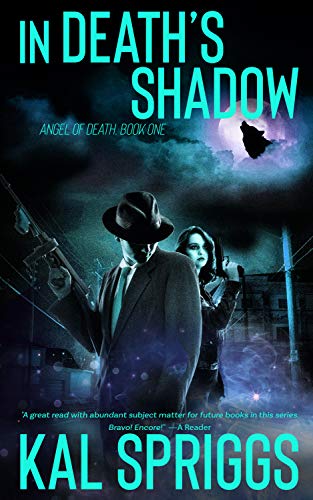
Review: in Death's Shadow

This is one of those books where I cannot tell you how it came to my consciousness. 


I recall getting a review copy. For all I know, Kal could have mentioned asking for reviewers in one of our groups and I just volunteered.

However I am glad that I got a chance to get this particular review copy, though I cannot tell you for the life of me how it came into my possession. 

This book has so many fun entertaining elements to it, it is hard to know where exactly to begin.

  • You have Metallurgy on bullets that I have not seen since the first Monster Hunter novel. 
  • It brings in Creative elements that would make Jim Butcher want to take notes. 
  • And frankly I also believe that there is a Quantum Leap reference just thrown in for good measure. (When you have a entity that no one else can see except our protagonist and he is called Sam I try to remember back to Quantum Leap to remember which character was played by Dean Stockwell — Al or Sam.)

Welcome to In Death's Shadow.
Ari lives in the shadow of death.
Ari is a combat veteran who has chosen to leave the military behind and live a quiet, normal life.  He's got a few problems though.  For one thing, the cops think he's a serial killer.  For another, a vengeful politician has put Ari in his crosshairs.  To make matters worse, Ari has a guardian angel... and not just any angel, Ari's protector is the Angel of Death.  When his life is in danger, people start to die, and Ari's guardian can sometimes be indiscriminate whose life he takes when protecting him.

That's not even the worst problem.  Death wasn't assigned to him by mistake.  An ancient werewolf wants Ari dead and even with death on his side, Ari might not survive.

Ari needs to find a way to stay alive, to clear his name, and most importantly to get out from under the shadow of death and live a normal life... even if it kills him.
Yes, a reaper playing guardian angel. I appreciate how Kal has avoided making our hero utterly indestructible by giving him a guardian angel who is akin to a weapon of mass destruction. 

Also appreciated? The execution and showing us the point of view of how at this reaper operated within his rules and regulations. 

Overall the book is so much fun I didn't put it down from the moment I picked it up. Right now I am only waiting for book two to come out (and I suspect book 3) so I can just buy all of them in hardcopy and spread them among my friends and family.

Kal brings a lot of wonderful little touches to his writing style. He has one of the better opening lines I've seen since "the building was on fire and it was not my fault." The very off-hand casual easy descriptions and backstory feels effortless -- largely executed with nice sharp background notes that leave a nice little sting and then move on with the rest of the story, easily throwing them out... But boy, does the reader feel them. 

There is also a lot of very easy humor such as how Sam (our Guardian Reaper) chooses to protect our hero. Sometimes to laughable degree — that though Kal never resorts to a Rube Goldberg mechanic. In terms of little touches, there are lines like "I'd managed to avoid ruining this set of clothing with blood at least." 

As I said, it's the little things.

Due to the nature of the Guardian reaper, Sam's protection has led to him having more than a few run-ins with the police. 

Kal even manages to have to make use of the old canard 
"Do you have plans for the day?" "No, I can't make plans, then they can throw around words like premeditation." 
I've been waiting for someone to use that in a novel for years. He just slid it in like a nice stiletto and moved on.

And no, even though Sam is very thorough about his job, he never turns into a deus ex machina. Never. That's freaking impressive.

I even like the little bit about how Sam really enjoys he 24 hour news cycle as "like an athlete staying up on sports news". Also, Sam's commentary on CNN is beautiful.

Great one liners include
"Are demons common in Detroit?" "Clearly you haven't been to Detroit lately." 
"Angels are the police of the Supernatural world" "What does that make Sam?" "Designed sniper."
There are several elements that almost feel like nods to other genre novels. For example one could be forgiven for thinking that Harry dresden's werewolf / Terminator scene is slipped in this one, or having supernatural beasties encountered in Afghanistan feels a little bit like Monster Hunter. And again, little touches like casually mentioning a werewolf and "how thermite grenades work wonders." 

As I said above, some of the metallurgy is so good, I intend to steal a lot of it. Including silver and mercury arounds, as well as electrum.

We have great action, dark humor, easily executed backstory that is all relevant to the plot, along with some great world-building at a pace Mickey Spillane would have loved.

I will also admit to highly enjoying Kal's version of werewolf mythology and lore. He does some nice variations that I personally have never seen before. And he comes up with perfect reasons and rationale for werewolves to be 100% pure evil all the time. After all, one of the enemies is literally a soul sucking werewolf from Hell.

And these are some of the lesser problems our hero will have to deal with. Because on top of a wonderful first novel, Kal has effortlessly set up a sequel without any actual sequel baiting. There is no Empire Strikes Back level BS. There is no "to be continued." And there is only an ending that would have worked perfectly well with the final line of a comic book movie. I mean a good one.

Spriggs is such a good author that it was nearly halfway through the book before I realized how many tropes and cliches that Kal had made good use of without them feeling at all like cliches or tropes. Including: a dead fiance, memory loss before a certain age, et al. However it feels more like the sort of mash up that brought us something as brilliant as Jim butcher's Codex Alera novels. 

At the end, we even get a little of the "hero of the borrowed heart."

Anyway, 5/5. This book was excellent. I look forward to the next one. Hopefully, it comes out soon.

Thursday, March 26, 2020

Review: Psycho (and Psychic) Games

I've already reviewed Amie Gibbons' Psychic Undercover (with the Undead), a law enforcement UF novel that really makes Laurell K. Hamilton look like an amateur (okay, LKH does guns better, but since LKH has even managed to make Edward a useless character, I'm not feeling charitable).

And now, we have Psycho (and Psychic) Games (The SDF Paranormal Mysteries Book 2)

Psycho (and Psychic) Games is ... 

Well, let's just say this is what happens when southerners make a Hannibal Lecter.


And they thought catching the serial killer was difficult...

Psychic Ariana Ryder just completed her probationary year and is now a full agent in the FBI's Special Division Force, a semi-secret branch that investigates paranormal crimes. She's got a great, if strict and strictly yummy, boss, a vampire for a boyfriend, and yeah, that has its issues and politics, but overall, life's lookin' pretty good.

The director, in a bid to score political points, puts Ariana on interrogating famous serial killer JB Truck, aka The Puzzle Master. Truck's been in prison two years and the authorities still can't figure out who all his victims were or where his vast resources came from.

Ariana's mission is simple, get visions off the psycho until they get the information they need.

But nothing's ever simple when there's magic afoot. The vampire queen's gunning for Ariana, there's a mysterious new shifter in town who needs a psychic's help (and is way too flirty considerin' she's a lady with a boyfriend), and Truck's got a few tricks of his own.

And he didn't end up in Nashville by chance.

Frankly, this book already has a very nice summation of the novel.
"This isn't Silence of the Lambs, it's freaking Nightmare on Elm Street."
I think this sums it up nicely.

I would say that this is as good as the first novel, though there are some minor issues. You don't "sick people" on others. There were one or two moments where I was concerned we were going to enter into squicky Anita Blake BS. Don't worry: while the sex did get heavier into detail, it's still better (and easier to skip) than the Hamilton books. In fact, it's more like how I with Hamilton would write her books. Maybe I could get back into them.

But as I said, this was is just as good as Gibbons' first novel in the series. It has elements of fantasy microbiology (which was my favorite parts of Grimm, and I would like to see more of that in fantasy in the genre in general).

And Gibbons' does some cute bits of business with the psychopath du jour. There was a good deal of 3D chess going on that reminded me of the Joker. And then he turns into Deadpool (from before he became a popular character)

This one even solved a lot of my problems with the first one. Because this was the book where our heroine is a full agent, and it was time for her to just grow the hell up.

And then she ends by setting up book three.

I've only got one noticeable problem with the series in general so far and this individual book in particular.

With the book, it's a bit unbalanced. About 75% deals with the serial killer. Then we have a break and we switch tracks, where it turns into a relatively good variation on an Anita Blake novel (a bit of soap opera, a touch of melodrama, and let's talk about feelings -- though that was in service of actually FURTHERING THE PLOT, so it gets a pass).

With the series. I don't have a really good sense of place. This is something that is occasionally a problem with even Jim Butcher. I don't get a sense that this is Nashville. I like to get an idea of where the heck I am. But aside from some of the accents, this could be almost any city and state in the union.

To be perfectly honest, this is still a 5/5. The problems in the book are easily overlooked and forgiven. If I were being more nitpicky, I'd penalize the overall score. But I'm not. And the book was still enjoyable.

So if you're interested into a nice mystery, something that harkens back to the days before Anita Blake before it became Penthouse letters, you're going to want to read this one.

Monday, March 23, 2020

Review: Adam Lane Smith's Valkyrie Doll and the Ashen Brotherhood


You may previously remember Adam Lane Smith from his work in Burrito Avenger and Making Peace (reviews in the links)

Adam has moved on to Christian Fantasy dystopia.

You have to be pretty flipping awesome to make me get through dystopia of any type. Mostly, you have to be named John Ringo.

If this sounds interesting, then you can get out Adam's main series of Deus Vult Wastelanders. The featured character is Gideon Ira -- imagine Judge Dredd as a crusader knight in powered armor. 

I wasn't a fan of book one. I blame the poor editing -- It opened with a fight with a demon, then tried to make us care about Gideon Ira, then put us with a fight against random thugs. Which isn't how you do story structure. Book two of Deus Vult Wastelanders was better.

The one I really liked is Valkyrie Doll and the Ashen Brotherhood. It's a spin-off from the main series, but I think it did a better job of introducing the world through character interactions than the first two books.


The Valkyrie revives in a coffin.

As she climbs from her tomb, she finds the end of the world has come and gone. Demons roam the blasted wasteland of what was once America. Humanity hangs by a thread and she, one of the last surviving Valkyries, is tasked with driving the rampaging legions back into Hell.

As she battles waves of demons, raiders, and mutants, the Valkyrie faces far darker questions: Does a created being have a soul? What does it mean to protect mankind as humans prey upon each other? When she confronts the cult of Moloch hidden beneath the ruins of an ancient abortion clinic, her burning need for justice may just prove more powerful than her orders to protect mankind.

The last survivors of humanity need her. Will she be our protector, or our destroyer?

Valkyrie Doll and the Ashen Brotherhood has multiple advantages over the main series. 

To start with, the Valkyrie has a personality. She's almost charming in her observations. She has a character arc and development.

And let's just say that she has an inventory system that feels like a very meta comedy about video game systems.

Another advantage this has over the main series is that our heroine is working with a team of various personality types. Adam's already got team dynamics down from Making Peace, and it really is one of his strengths. 

Overall, this was better than the last two. And if you want better than Larry Correia's Son of the Black Sword, and looks like a cross between Solomon Cane with a protagonist out of Nier: Automata (if Neir Automata was, you know, GOOD), then give Valkyrie Doll and the Ashen Brotherhood a try.


Friday, March 20, 2020

Review: Mel Todd's No Choice

So, what happens when you are a cop in the middle of a bank robbery -- you're held hostage, a child is about to die.

You turn into a giant puma and kill them all, of course.

Officer McKenna Largo is having a very strange day.

But she has No Choice.
Book one in the completed Kaylid Chronicles. Over 500,000 words. Start the journey here.

Being a Cop – difficult but rewarding.

Cougar – WTF? But can be dealt with.

Targeted by drug dealers and dirty cops – Watch out, this cat bites back.

McKenna Largo loves police work and would rather no one focus on her. Transforming into a cougar in the middle of a bank robbery, is a shock. But when a video of the event goes viral, she becomes the reluctant public face of shifters appearing around the globe.

The police department uses her for “PR”, and the governor creates and inclusiveness campaign, putting criminals behind bars seems a million miles away. Trying to juggle the animal she now is, the strange attention, and a society changing faster than anyone expects, McKenna worries she might be a monster. When criminals capture her and innocent young shifters, the cougar and the cop combined must decide where duty takes them.

Will McKenna run scared from the animal inside, or will she save the day and set her inner beast free?
If you like strong characters, fast-paced action, and unique shifters, then you'll love Mel Todd's exhilarating novel. Buy No Choice to shift into a thrilling urban fantasy today!

No Choice (Kaylid Chronicles Book 1) by [Todd, Mel]

But millions of people around the world are also changing, shifting into various and sundry furry predators.

And no one knows why.

Officer Largo and her partner are at the heart of the firestorm. A long the way, she has to deal with police regulations, media nutcases, and unwanted celebrity.

Mel Todd is really fairly awesome at this.

Imagine doing cops as well as Grimm or Blue Bloods.

AND doing media relations as well as Carrie Vaugh's Kitty Norville.

AND examining the full spectrum of cultural impacts of the supernatural twenty times better than the Anita Blake novels.

No Choice would be that book.

No Choice is book one. I got the entire set for $.99, and this is more than worth it. I probably would have paid full price if I had heard of them in advance.

5/5 Stars. Easily.

Monday, November 25, 2019

Review: Overlook, by Jon Mollison

Part of the advantage of being part of a publisher is that I get to read books for free.

The disadvantage is that reading the e-ARC months before the book releases means I have to wait months to review it.

Anyway...

Of the Silver Empire superhero books released thus far, I believe this is my favorite to date. And this is out of an elite batch of authors, all of whom excel in their subgenres. Morgon Newquist's was more classic superhero. Kai Wai Cheah's was more police procedural or noir thriller. JD Cowan's was more Isekai.

Jon Mollison's Overlook is more spy thriller. I could almost hear Jeffery Donovan's Michael Weston narrate this one.

Nothing is more dangerous than an invisible man.

Joe’s spent his life being forgotten. Not even the IRS comes for his back taxes. He’s a ghost, a perfectly average, perfectly forgettable man. It suits his purposes, though it’s a lonely existence. He can live as he wants, plying his almost-invisibility for freelance jobs.

Then a pretty blonde finds him when no one else can, asking for his help solving a murder. He almost says no, despite his instincts to help a damsel in distress. But how did she find him? And who is she?

He takes the job to find out. But he bites off more than he can chew as he realizes a brutal secretive organization called The Phoenix Ring is behind the murder, and somehow they can predict his every move.

A new Heroes Unleashed series begins with Jon Mollison’s Overlook, a fast-paced, action-packed superhero spy novel that will keep readers guessing until the end.

Can Joe defeat the shadowy Phoenix Ring? Or will his powers fail him when he needs them the most? Read Overlook today and find out!
Image may contain: 2 people, people standing and textAs the old poem goes,  "Last night I saw upon the stair, /A little man who wasn't there,/ He wasn't there again today /Oh, how I wish he'd go away..."

Overlook begins with a low key version of a James Bond opening, but it's one of the better fight scenes I've read in a while. It's clear, well blocked out, and sets up the rest of the book as perfectly as one of those over the top Bond scenarios.

Our hero, dear reader, is an average man -- average color, hair, eyes, appearance. Before he received his super powers, he was a sniper instructor, and already a bit of a ghost (insert John Ringo joke here). One day, he just ... disappeared.

But now, he's the little man who wasn't there. He's the middle child of five sons. He is so invisible, he has to cook his own food at a diner. When he's adrift at sea, he has to save himself, because no one would see his and save him.

His name? Joe Smith. Just plain Joe.

Because of course that would be his name.

Despite avoiding trouble as best he can, it finds him anyway. Because with great powers comes great headaches. And one is about to find him. It starts with a simple murder, and evolves into a conspiracy of the Phoenix Ring -- an organization so monstrous and so complex, the leads are less dead ends "and more of a knotted ouroboros with multiple heads eating its own multiple tails."

And that's a nice little sample of what the narration's like. There's at least one car chase so awesome, it needs a Hans Zimmer soundtrack.

If one were to compare overlook to the average thriller, it would be more like Adam Hall's Quiller series -- like with Hall's work, there are moments when one reads along, there's a cliffhanger, and then the reader must keep going in order to find out what happened. 

Joe doesn't have the powers of Superman, or the tech of Batman. He gets beaten up a lot. Unlike Jim Rockford, he makes certain that other people get beaten up alongside him.

Additional props must be given to the design of the villain of the piece. They are freaking evil. Imagine a Dean Koontz villain... then tone down the mustache twirling to a reasonable level. Perhaps using CS Lewis' NICE from That Hideous Strength. The enemy here is no less evil, with similar methods and motivations. They're anti-technology because technology makes it harder to control the masses, and their inquisitors look like a gender studies Umbrage of Rowling fame. 

The Phoenix Ring is less a reductio ad absurdum of a lot of current trends, and more like the logical outcome. They're scary because we could look around and see exactly how they would be the end result of current events.

.... As I said, they're like a Dean Koontz or CS Lewis villain.

Short version -- if you've read the other Silver Empire novels, Overlook is a great continuation of the universe. If you haven't read the previous works, this is an excellent stand alone novel.


While you're at it, you might want to check out my award winning Saint Tommy NYPD series as well.